Reposted by John TullochDanny Chambers MP 🔶 @dannychambers.bsky.social · 14/01/2025Being a horse vet is very dangerous. Please don't ask your vet to 'have a go' in order to avoid sedating your horse. If your vet recommends sedation it's for the safety of the vet, the owner and the horse. 383
John Tulloch @jtepivet.bsky.social · 14/01/2025Our recent study on how vets define workplace injuries has been picked up by Horse & Hound >20% said something was only an injury if couldn’t carry out work as normal. 19% said they wouldn’t report any injury article: www.horseandhound.co.uk/news/equine-... Paper: doi.org/10.1093/occm... 031
John Tulloch @jtepivet.bsky.social · 13/05/2024Start the week off by reading our new paper about zoonotic infections and vet students! Almost a third reported experiencing one during their training! How did they acquire them? What did they do once they had it? Read more to find out! 🐄🐑🐖🐶🐈 doi.org/10.1186/s128...doi.orgZoonotic infections in UK and Irish veterinary students: a cross-sectional survey - BMC Public HealthBackground Zoonotic infections are a recognised risk for the veterinary community. Veterinary students are at risk, due to the range of activities they participate with on training coupled with their ... 000
John Tulloch @jtepivet.bsky.social · 10/05/2024Thanks again to the amazing author team and to @LUVS_INSPIRE Here is the paper again: doi.org/10.1186/s128... If you have any thoughts and questions, would love to hear them! 000
John Tulloch @jtepivet.bsky.social · 10/05/2024Conclusions: Vet students are at increased risk of contracting zoonotic diseases, esp on farm There are cultural issues re: how the vet profession view workplace infections! Attitude & behaviour change is needed to reduce the risk to students & normalise illness reporting 110
John Tulloch @jtepivet.bsky.social · 10/05/2024Results: Students: accepted the risk of a zoonosis Reluctant to take time off to recover Did not report their infections Unaware of appropriate PPE usage and infection control practices Sense of bravado was normalised and necessary! Evidence of 'maladaptive coping strategies' 110
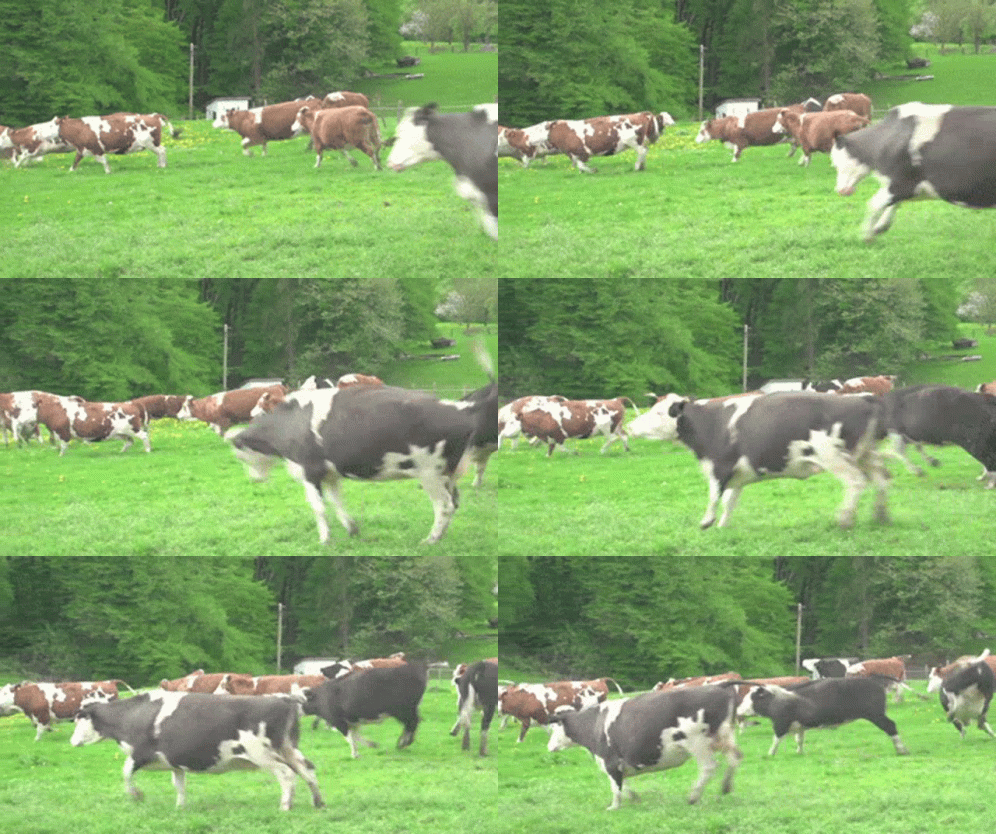
John Tulloch @jtepivet.bsky.social · 10/05/2024Results: Almost 500 students responded 32% had reported having had a zoonosis whilst on their degree Crypto was the most commonly reported 91% of infections were acquired on farm placementsmedia.tenor.comGates Open Moo GIFALT: Gates Open Moo GIF 100
John Tulloch @jtepivet.bsky.social · 10/05/2024Methods: We sent out an in depth survey to vet students in and . This was analysed with a mixture of quantitative and qualitative approachesmedia.tenor.comGenius Smart GIFALT: Genius Smart GIF 100
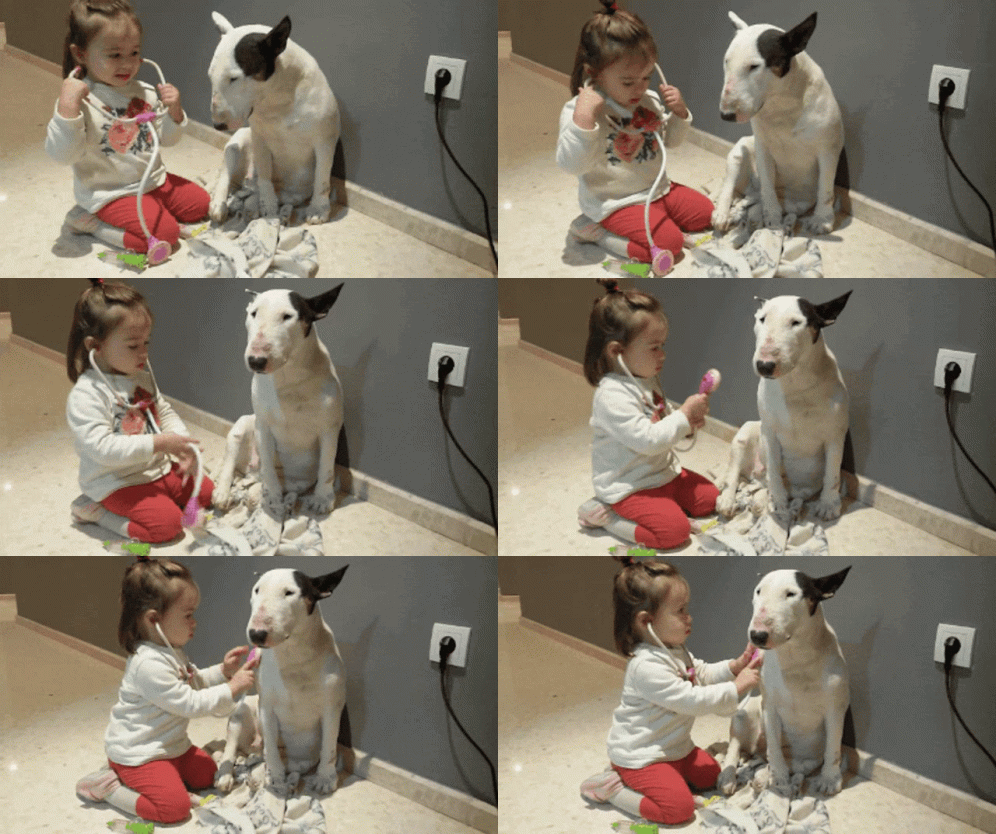
John Tulloch @jtepivet.bsky.social · 10/05/2024Aims: Vet students are exposed to so many different animals during their training and so there is the potential for zoonotic infection (ie a disease acquired from an animal). We wanted to know how common this was in UK and Irish vet studentsmedia.tenor.comKid Doctor GIFALT: Kid Doctor GIF 100
John Tulloch @jtepivet.bsky.social · 10/05/2024🚨New paper🚨 Zoonotic infections in UK & Irish Vet Students Funded by Academy of Medical Sciences via INSPIRE doi.org/10.1186/s128...doi.orgZoonotic infections in UK and Irish veterinary students: a cross-sectional survey - BMC Public HealthBackground Zoonotic infections are a recognised risk for the veterinary community. Veterinary students are at risk, due to the range of activities they participate with on training coupled with their ... 123
John Tulloch @jtepivet.bsky.social · 08/02/2024Great paper by James Oxley and team exploring how vet students stayed further away from a virtual reality aggressive dog if they had received canine behaviour training. Highlights that VR may be a critical part of dog safety education. www.nature.com/articles/s41...nature.comVeterinary students’ proximity to and interpretation of a simulated “aggressive” dog before and after training - Scientific ReportsScientific Reports - Veterinary students’ proximity to and interpretation of a simulated “aggressive” dog before and after training 020
Reposted by John TullochTimothée Vergne @timvergne.bsky.social · 06/02/2024Epidemiology is a scientific discipline aiming at understanding the factors that influence the distribution of diseases in populations to provide scientific evidence to policy-makers. 🎬 Check out in video what doing research in #veterinary epidemiology in our team means! t.co/y3PBRQrjbet.coEpidemiology and decision-making in animal health 021
John Tulloch @jtepivet.bsky.social · 15/12/2023A big cultural change needs to occur across our profession. We are decades behind the practices and cultures of many other professions. We should be striving to look after both our physical and mental health. Fin 000
John Tulloch @jtepivet.bsky.social · 15/12/2023This is the first output from our CVS funded project exploring veterinary work-place injuries. I implore you to read some of the quotes in the paper, as they are shocking. Future output is even more concerning than what is captured here. doi.org/10.1101/2023... 6/n 100
John Tulloch @jtepivet.bsky.social · 15/12/2023Impact: Injury reporting systems are likely to significantly under-represent the true incidence of injuries It highlights a cultural issue about what is deemed an injury, what practices are deemed 'everyday risks', and the importance of recording and reflecting on injuries. 5/n 100
John Tulloch @jtepivet.bsky.social · 15/12/2023Most will only report injuries if blame can be attributed to something/someone else (ie dog bite), but will not report injuries that were caused by themselves. A concerning number of people thought that needlesticks were minor injuries and do not need reporting 4/n 100
John Tulloch @jtepivet.bsky.social · 15/12/2023In essence, each sector of the profession defines injuries differently. Most notably that equine and farm vets define something as an injury if they either need significant medical treatment or will take time off work 3/n 100
John Tulloch @jtepivet.bsky.social · 15/12/2023As not peer-reviewed yet, I will not delve into too much depth, so please read and let me know your thoughts. 2/n 100
John Tulloch @jtepivet.bsky.social · 15/12/2023🚨New pre-print 🚨 Pain, inconvenience, & blame: Defining work-related injuries in veterinary workplace doi.org/10.1101/2023... Funder: CVS UK Ltd Written with amazing co-authors! Thread to follow 1/n 121